Tuesday, August 5, 2014

Baseball and Adam Mattice,

I hope you have seen the August issue of Our Towne Bethlehem.  My latest article is about Bethlehem and Baseball.  Here's a link which hopefully has been updated (it still showed July when I last checked.)

http://www.ourtownebethlehem.com/

Local author Michael Hallisey also has a great article about Bethlehem baseball with a lot more info than I could provide in Our Towne.

http://michaelhallisey.wordpress.com/2012/10/10/we-played-the-best-and-never-lost-a-series/

Hallisey mentions Adam Mattice, who was known for his curve ball pitching.   Adam's son John played catcher for the Slingerland Village Wonders in 1918-20.  It just so happens that Adam Mattice's great grand son contacted me last week to ask if I was interested in looking at some old Mattice family documents.  "Of course!" I said.


Judging by the mustache, the player standing on the far left MIGHT be Adam Mattice.

Adam Mattice (1863-1917) played ball for several teams in Albany and Schoharie counties in the 1880s and 90s including the team Central Bridge and the Slingerland Echos.  He might even have played for the Altamont Stars.  Mattice was known for his curve ball.  An undated newspaper article notes "Although there were pitchers in Albany familiar with the use of the curved ball, Mattice was the first to introduce it in this vicinity, and by its use became practically invincible when opposing the old school of sluggers accustomed only to the swift straight kind."

The Albany Evening Journal of March 23, 1903 recalls an unusual game from 1882 which featured Mattice's pitching for Central Bridge.  It goes on to note that "He is now living in Slingerlands and is a train dispatcher for the Delaware & Hudson railroad, being as expert with the telegraph key as he was years ago with the baseball."  (The unusual part of the game involved a betting scheme gone awry.)

And indeed, the 1900 census offers a glimpse of the Mattice household.  Their home in Slingerlands was dwelling number 69 in the enumeration.  Adam was born in February 1863 and is 37 years old.  He works as a railroad train dispatcher.  His wife Mary was born in October 1865 and is 34.  They have been married for 15 years.  Their children are Blanche (age 14), Dudley (age 11) and John (age 2). All were born in New York State and their parents were born in New York State. All, except John, can read, write and speak in English.  They are home owners with a mortgage.

Husband and wife Adam Mattice and Mary Hagadorn Mattice
The Mattice home still stands on New Scotland Road in Slinglerlands.
It was built about 1898 when Adam and Mary moved to the hamlet. 
Many thanks to John Morrill for sharing his family's photos and papers!


*******************
Today is December 8, 2015 and I wanted to add a postscript about Adam Mattice.  I recently found his obituary from the Altamont Enterprise.   It intrigues me that baseball is not mentioned at all.  His career with the Delaware and Hudson spanned 30 years starting as a train dispatcher, clerk in the auditing department and as an assistant in the legal department. He studied law with his father and was admitted to the bar in 1897. He died in 1917 at age 54.


Thursday, July 24, 2014

A Visit to the New Scotland Historical Association Museum

In my quest to visit little museums this summer, the Husband and I trekked out to New Scotland on Sunday and visited a local history gem - the New Scotland Historical Association's museum.  I knew there would be Bethlehem connections because the Town of New Scotland was created from the Town of Bethlehem in 1832.

I enjoyed this auction poster - it really speaks to the agricultural roots of Bethlehem and New Scotland.


In the fine print you might notice (I know, if only it were vertical instead of horizontal) that the sale was put on by the Albany County Breeding Association and scheduled for September 12th, 1860.  The location was "at Log Tavern Farms, on the New Scotland Plank Road, two miles from Albany, N.Y."  I have mentioned the Log Tavern and the trotting course - or race track - in a previous post.  In 1860, the Log Tavern Farm was firmly in the town of Bethlehem.

Further down are descriptions of specific stock offered for sale.  A large herd of short horn cattle includes "Finella, bred by S.E. Bolden, Esq... and her calves."   Black Hawk and Messenger breed horses include "the celebrated Black Hawk Maid by the original Vermont Black Hawk"  It is noted that "The proprietors have been many years engaged in breeding FAST TROTTING HORSES"

The names of the proprietors or "breeders and managers" listed might have a familiar ring:

William M Bullock, Bethlehem near Albany
Joseph Hilton, New-Scotland
William H. Slingerland, Norman's Kill
William Hurst, Albany, N.Y.
Geo. W. Adams, Whitehall, N.Y.

I am going to speculate here that William Bullock is almost certainly related to Matthew Bullock whose Bullock Road historic marker says he "Introduced English Short Horn Cattle into Albany County about 1815 and won premiums at fairs" .  Joseph Hilton is probably related to the Hilton family of Hilton Road in New Scotland, William H. Slingerland was well known in the hamlet of Slingerlands.  In 1860 it was still known as Normanskill.  William Hurst - that would be Hurstville.  And George W. Adams - while listed as being from Whitehall - is he perhaps related to the family from Adamsville - today's Delmar?

Here's one other picture of an area in museum that caught my eye - one day I'll write a whole other blog post about the Anti-Rent War and Calico Indians.


So go for a ride out New Scotland way on Route 85 and visit this small museum.  They are open Sunday afternoons.  Here's a link to the website  http://www.newscotlandhistoricalassociation.org/info.html

It is worth the trip.  Oh - and if you like Thacher Park - the museum has a wonderful exhibit on the history of the park and a some hands on fossils.

Monday, July 21, 2014

Historical Gifts

I thought of calling this post "The Stuff People Give Me" but that seems a little too flip, even for me!

I am deeply grateful for those thoughtful folks who seek to preserve their piece of Bethlehem history either with the Town Historian's office or the Bethlehem Historical Association.  Just in the past couple of weeks I have received these items.


Plus this large one.


 So, what is all that stuff?

The title of the book on the upper left is, and I quote:

Gazetteer of the State of New York Embracing a Comprehensive Account of the History and Statistics of the State. With Geological and Topographical Descriptions, and Recent Statistical Tables Representing the Present Condition of Each County, City, Town and Village in the State.

It is by Franklin B. Hough, A.M., M.D., published in 1872 in Albany by Andrew Boyd.  I am looking forward to reading about the state of the state from 142 years ago. Here's the bits about Bethlehem.


The scrapbook concerns the Rotary Club of Delmar and includes their application for charter membership to Rotary International.  The snapshot below is of their 1st anniversary dinner held January 6, 1959 at the Center Inn in Glenmont.


The newspaper is the August 6, 1950 edition  of the Albany Times Union.  While I often read newspaper clippings from scrapbooks or online, it is a whole different experience to page through a complete, original newspaper.  Physically, it seems huge (opened up flat, it is about 30" wide and 22" high not including the binding boards) and the paper feels weighty.  The comic section is several pages long, and again huge by comparison to the modern paper, and even compared to the  newspaper I remember reading as a young adult 30 years ago.

(My apologies for the sideways pictures - I still haven't figured out why Blogger does this. I swear they are horizontal on my computer!)


So, thank you Dan, Robert, Virginia and Dwight. Your gifts are much appreciated.

Post Script: Did you notice I left off the postcards?  They are of Clarksville in the early 20th century.  Soon I plan to head out that way and see if I can line up the "now" photos for these "then" postcards.  And lunch at Jake Moon's, and maybe a peep into the Clarksville cave while I'm there.

Monday, July 7, 2014

Bill Howard's Civil War article

Did you see Bill Howard's article The Cruel Year of War in the Sunday June 29, 2014 issue of the Times Union?

Here's a link to the online version. http://www.timesunion.com/default/article/Commentary-The-cruel-year-of-war-5587046.php#page-1 

Sadly, the online version does not have the photos, so here's a snapshot.


The two on the bottom are of particular interest because of their Bethlehem connection.

On the bottom left is Pvt. William Frazier of Slingerlands.  Frazier was born October 19, 1844 and enlisted with the 91st New York Infantry in March of 1864.  He survived the war and lived on Maple Avenue until his death in 1926 at the age of 82.

On the bottom right is Capt. David Burhans of Bethlehem.  Burhans was born on June 24, 1840.  He served in Company H of the 43rd New York Infantry and died while carrying the regimental flag at Po River, Virginia on May 10, 1864. He was just 23 years old.  Here's how he was described in Heros of Albany County.


And in case you are curious, the top picture is of Cpl. William H. Fisher who served in the 97th New York Infantry and died on May 15, 1864 from wounds he received at Gettysberg and The Wilderness.  I don't know of a Bethlehem connection for him.

Thursday, June 26, 2014

A New New York Driver

So, the Daughter passed her road test this week, and of course that got me to thinking about the history of the New York driver's licence - which lead me to this  wonderful article in the New York Times.   You can scroll through images starting with a 1910 chauffeur's license right on thru 2013.  Go ahead, make the jump, I'll wait.

http://www.nytimes.com/interactive/2013/03/17/nyregion/17licenses-evolution.html?_r=0


Now for the Bethlehem connection.

Below is Andrew J. Earl's 1915 chauffeur's license.  Earl lived on McCormack Road in Slingerlands.


Here is Mr. Earl in his automobile.  A note on the back of the photo says he was "one of the first in Slingerlands to have a car.  He knew how to take care of it.  Mr. Sprong sent him to Boston to learn how to repair and maintain an automobile."  You might remember Mr. Sprong from earlier blog posts.


And now for a history mystery.  I love this photo of the two couples in an automobile.  It is a photo postcard and the original item is in the Town's collection.  I looked at again this afternoon.  Written on the back is the date 1910 and the two men are identified.  Oliver Wright is behind the wheel and Scott Wright is in the back seat.  The women are unidentified.  It seems to me that something is not quite right with the auto in the picture.  Look at the area in front of the steering wheel.  Doesn't it seem strange?  The whole vehicle looks flat and kind of fake. I wonder if the couples are posing in a mock up of an automobile.  Perhaps the postcard is a souvenir from a fair or festival?  It is a mystery.


Tuesday, June 17, 2014

Sears Homes

Just a quick post to share this website.

http://www.searsarchives.com/homes/byimage.htm

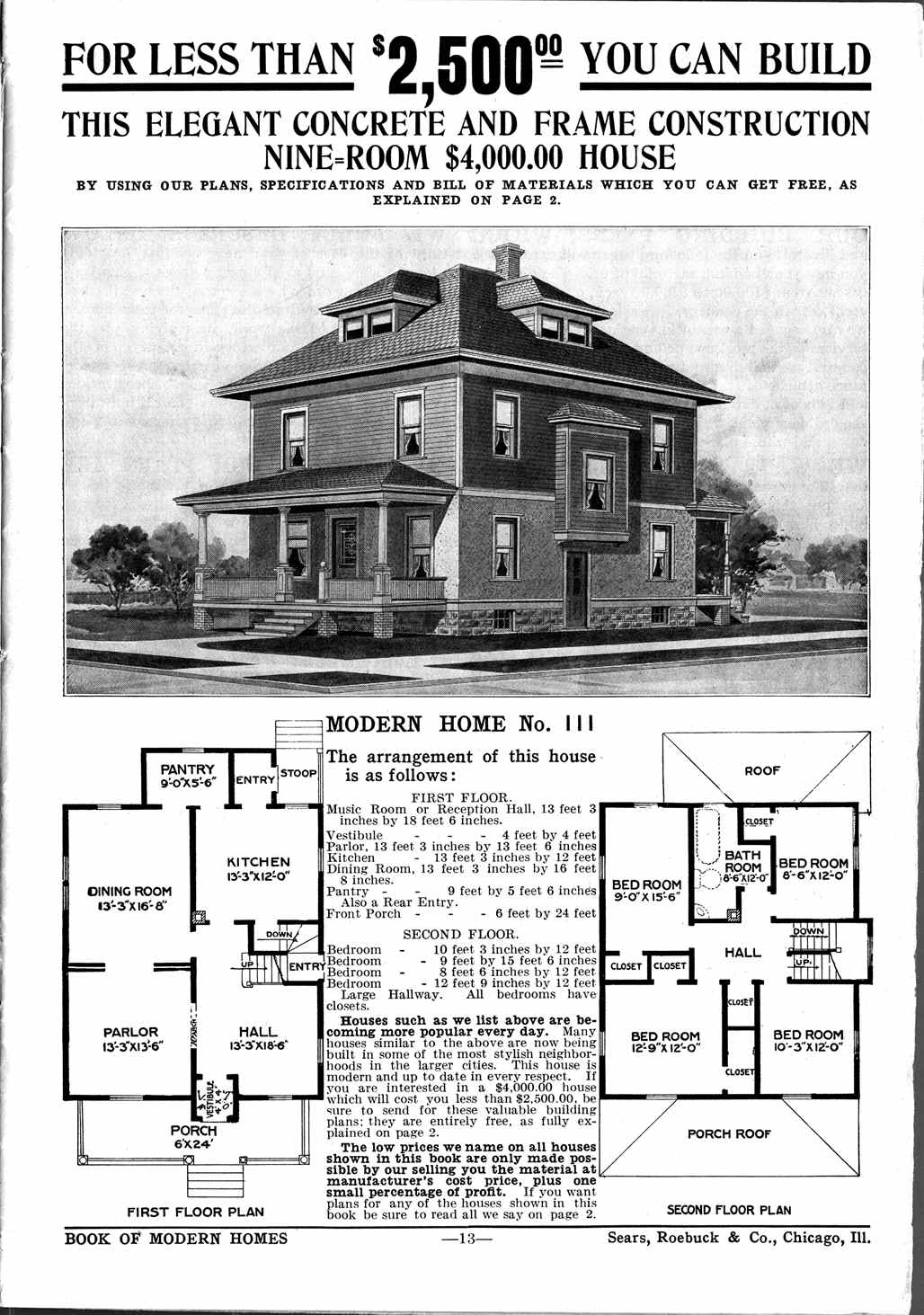
Someone again this morning asked me whether their house was a Sears home and a quick Google led me to the Sears Archives - oh my - your historian's heart again goes pitter pat.

Pick an era, like 1908 to 1914 and up comes a listing that looks something like this...


Do you notice the Chelsea model... you can look for homes very similar to this along Kenwood Avenue in Delmar.

Now click on the Chelsea image and you get....


Wonderful stuff... thank you Sears!

Monday, June 9, 2014

A Visit to the Bronck Museum

Yesterday afternoon, the Husband and I took a spur of the moment drive down Route 9W to see if the Bronck Museum was open.  I've driven by a million times and keep meaning to visit. We had a wonderful tour of this historic property. Amazingly, it stayed in the family for 8 generations of Broncks, from Pieter and Helletje in 1662 to Leonard Bronk Lampman who willed the property to the Green County Historical Society in 1939. (And yes, Pieter is a brother of Jonas Bronck founder of that famous Bronx to the south of us.)


When Pieter, a Swede and his Dutch wife Helletje bought their three square miles from the Mohicans in 1662, what is now a tame and manicured farm with a lovely view of the correctional facility in Coxsackie, was deep forest and true wilderness. Our guide pointed out that northern Europe where Pieter and Helletje grew up had very little forest left. The wealthy might keep a wooded hunting preserve, but the common folks were certainly not allowed in.  Deep and scary woods were unfamiliar territory for these two.

By 1663, Pieter and Helleje had built their sturdy, one room home from local  limestone and hard pine (it is the building on the left side of the picture above.)  The large, hand hewn beams inside are remarkably smooth and the floor boards are amazingly wide.  What interested me is that this house, the oldest surviving in the entire Hudson Valley, is not very Dutch.  The museum's brochure says it is "an excellent example of the utilitarian dwellings favored by many of the first Northern Europeans to settle the valley."

The house next door (on the right in the photo) was built in 1738 during Leendert Bronck's tenure and has all the Dutch-ness one could want.  Dutch doors, H-bent beams, gables with "mousetooth" brick work, steep roof, jambless fireplaces, etc.  Interestingly, the brick walls are a veneer attached to the sturdy wooden frame. Our tour guide assured us that the bricks could all fall down and the house would remain standing. Those fancy porches out front were added in later years to give the home a more symmetrical Federal feel.

5.  Historic American Buildings Survey, Thos. T. Waterman, Photographer '36. - Peter Bronck House, West Coxsackie, Greene County, NY
A 1936 photo from  HABS shows the gable end of the 1738 house and the passage way that connects the two houses. 

In the beginning, out here in the wilderness near the Indian trail, Pieter thought he could make a living trading for beaver pelts.  When that didn't work out, and after Pieter died, Helleje and her son exploited the timber on the property adding a saw mill and grist mill.  Records indicate that grinding stones for the grist mill were purchased from our very own Albert Bradt who was an early settler in what was to become Bethlehem.

Our tour included the separate, one room kitchen building, and we explored the many red painted barns on our own.  Sadly, we couldn't go in the 13 sided barn - happily the Dutch barn was open and stuffed with farm equipment, carriages and even a sleigh.  Another barn was open with displays about Greene County history including a model of the Catskill Mountain House - I didn't realize just how huge a place that was. We concluded our visit with a tranquil walk by the family burying ground near the Coxsackie Creek.

This place is a gem - go and visit!  Check out the Greene County Historical Society's website for more info.

http://www.gchistory.org/bronckmuseum/bronckfamily.html

You can go to the HABS webpage for more 1930s pictures

http://www.loc.gov/pictures/collection/hh/item/ny0226/